
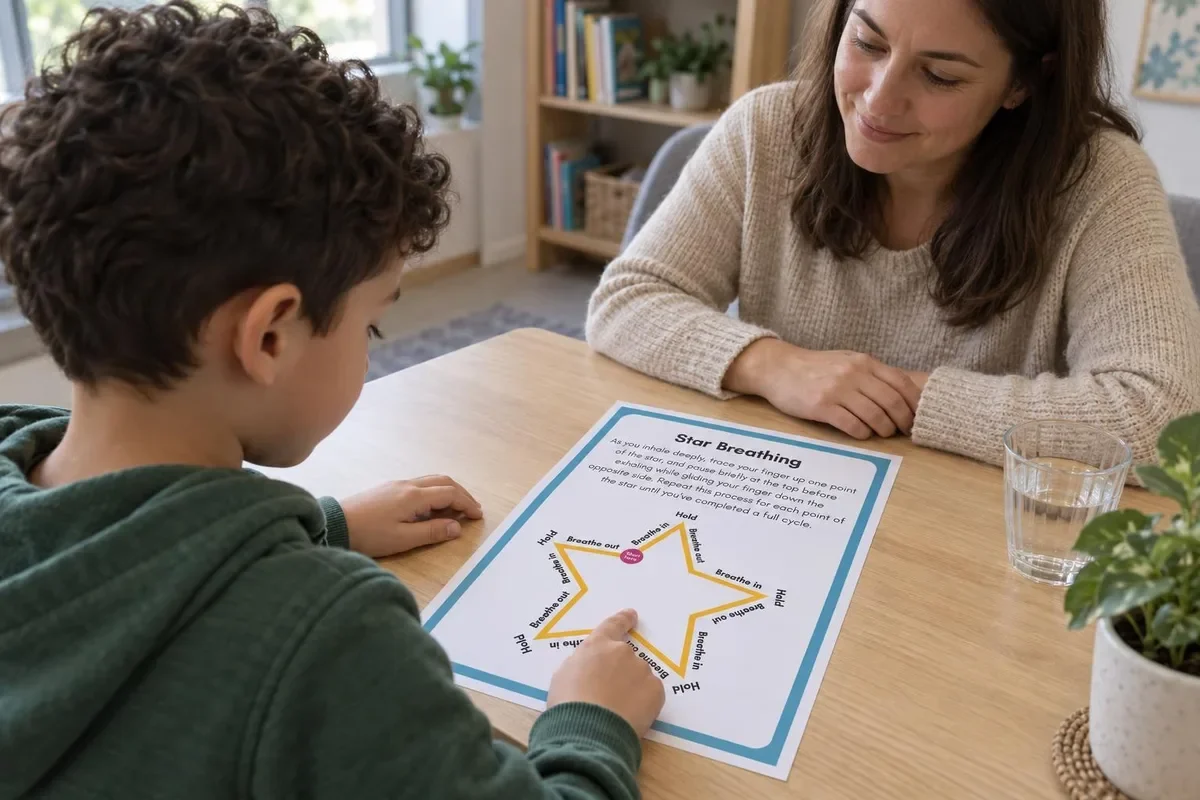
He comes in from school still buzzing. Before you say a word, you slide a page across the table: a big star. “Trace it with your finger. Up as you breathe in, down as you breathe out.” Five points later, he’s leaning back in his chair.
That’s mindfulness for kids. Not twenty minutes of silence. A minute or two of noticing, done together.
And it’s well supported. A review of 33 randomised controlled trials, with more than 3,600 children and teens, found that mindfulness improved attention and reduced anxiety, stress and low mood. (Dunning et al., 2019)
A second review, of 76 studies, found something even better: the benefits were larger at follow-up than at the end of the programme. (Klingbeil et al., 2017)
What a child practises with you keeps growing after the session ends.
In short
Mindfulness for kids works best in short, playful doses, practised together in the session. Use one short practice at the start, one when the child needs it, and one at the end. Two to five minutes is enough. Eyes open is fine.
What it gives a child
In the review of 33 trials, mindfulness stood out for three things, even when compared with other active programmes: children became more mindful, felt less anxious and stressed, and their mood lifted. (Dunning et al., 2019)
Noticing comes first. A child who can notice a tight tummy or a fast heart has a moment to choose what to do next.
That’s the heart of mindfulness for children. Not sitting still. Noticing what’s happening inside, right now, with curiosity.
A mindfulness plan for one session
Five pages, placed where they fit in a normal session. Pick one or two per session, never all five.
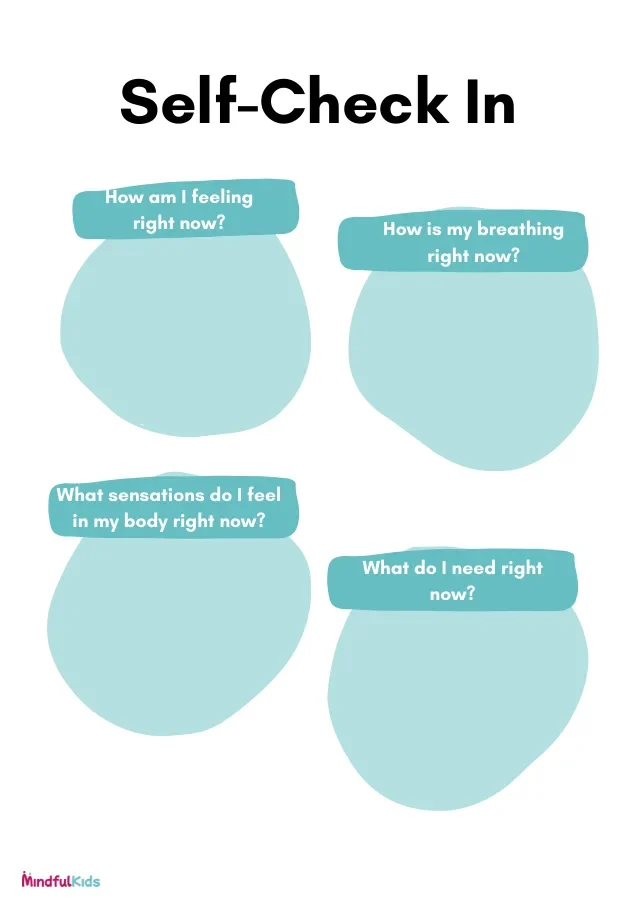
The first two minutes: Self-Check In
Four soft clouds with four questions. How am I feeling right now? How is my breathing right now? What sensations do I feel in my body right now? What do I need right now?
It turns “hi, how are you” into a moment of noticing. A child who runs in from school often doesn’t know how he feels until he stops for this. The last question, “what do I need?”, tells you how to plan the rest of the session.
A good first line: “Before we start, let’s check in with your body, like checking the weather.”
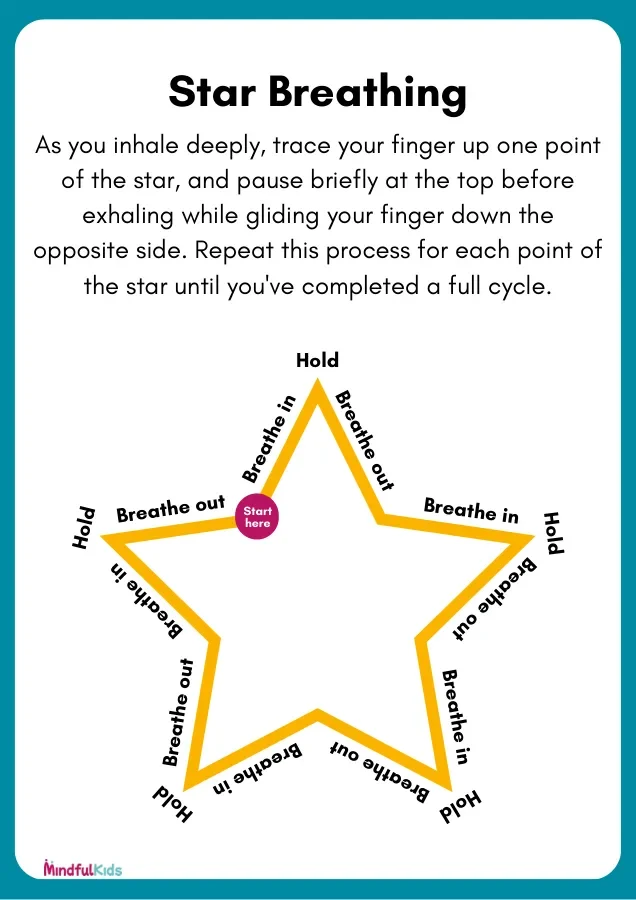
When the body is going too fast: Star Breathing
A big star with “breathe in”, “hold” and “breathe out” along its edges. The child traces up one point while breathing in, pauses at the top, and glides down the other side while breathing out. Five points, five slow breaths.
In studies with healthy adults, slow breathing, fewer than 10 breaths a minute, is linked to feeling calmer and more relaxed. (Zaccaro et al., 2018) The finger is the secret. It gives the breath a path to follow and keeps the pace slow without counting.
Keep it short and do it often. One star, practised every session, becomes a habit the child can reach for anywhere: in class, before a test, at bedtime.
A good first line: “Let’s trace the star together. Up as you breathe in, down as you breathe out.”
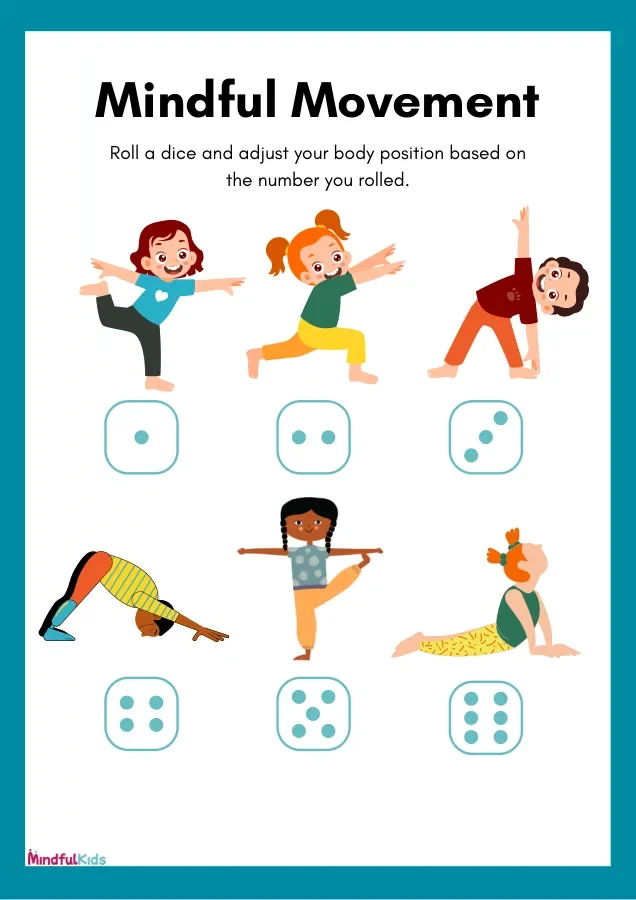
When sitting still is the problem: Mindful Movement
Six children in six poses, each matched to a number on a dice. The child rolls, finds the pose and holds it for a few breaths, noticing which muscles work and how the body feels.
This is mindfulness for the child who can’t sit still, which is many of the children you see. Moving is not the opposite of mindfulness. Moving while noticing is mindfulness. A roll of the dice also adds a bit of fun, which helps a child say yes.
A good first line: “Roll it. Let’s see what shape your body makes today, and how it feels.”
Finding words for the body: Body Sensations
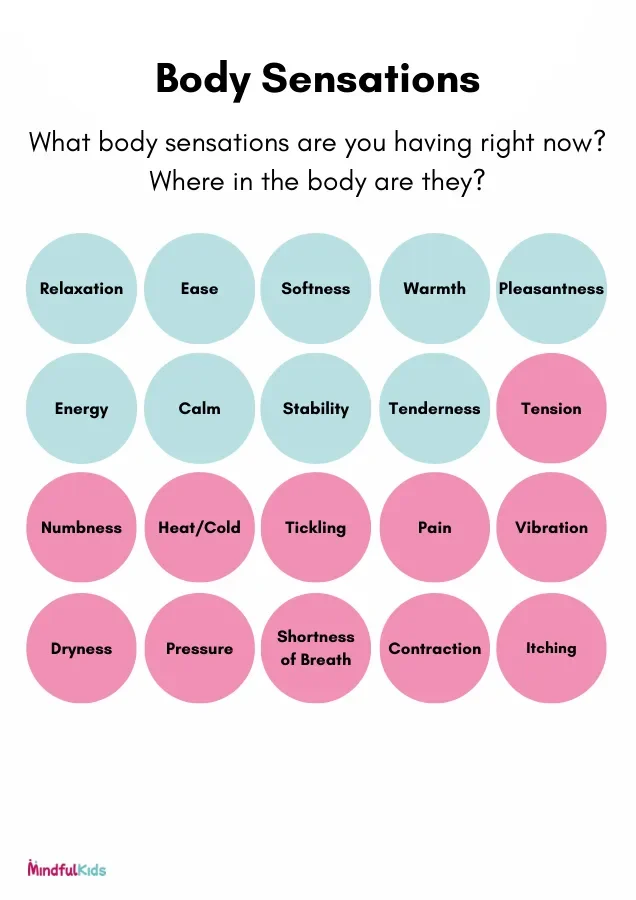
Twenty bubbles, each with one body word: warmth, tickling, tension, pressure, calm, energy, shortness of breath and more. The child circles what they feel right now and says where it is.
Many children feel a lot and have few words for it. This page hands them the words. “My tummy feels weird” becomes “tension, here”. That’s a skill they’ll use far beyond your room.
A good first line: “Close your eyes or look at the floor, whichever you like. Now pick the words that fit your body.”
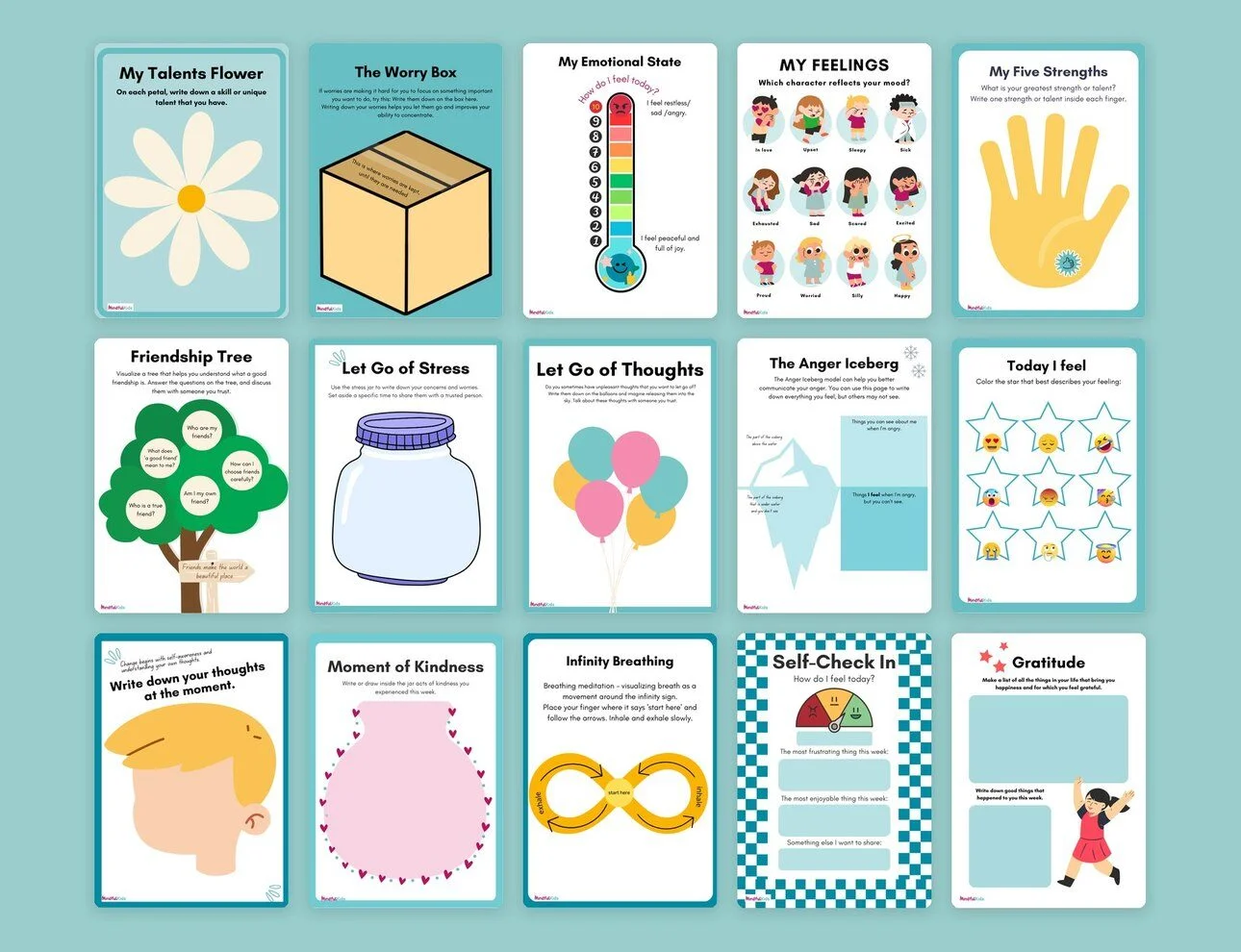
All these pages are in this kit
CBT & Mindfulness Kit for Kids (4–11)
Over 50 printable worksheets, including breathing, movement and body-awareness pages. Instant PDF download, 30-day money-back guarantee.
The last two minutes: My Mindfulness Page
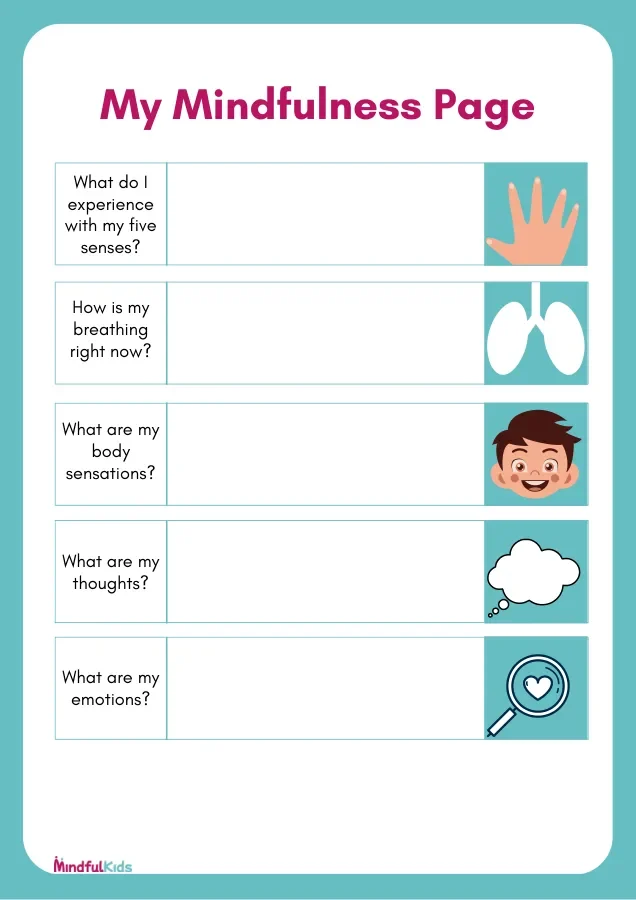
Five rows, each with a picture: a hand, lungs, a face, a thought cloud and a heart. What do I experience with my five senses? How is my breathing right now? What are my body sensations? What are my thoughts? What are my emotions?
It closes the session the way the check-in opened it, so the child leaves noticing. Compare it with the check-in from the start. Children love seeing that their breathing went from “fast” to “slow” in one session.
A good first line: “Let’s check in one more time. What’s different from when you came in?”
Small things that make it work
- Do it with the child. Trace your own star. Roll the dice for yourself too. Children join in when they’re not being watched.
- Eyes open is fine. Some children feel unsafe with closed eyes. Offer “look at the floor” as an equal choice.
- Short and often. Two minutes every session builds more than twenty minutes once.
- Call it noticing. “Let’s notice your breathing” invites curiosity. “Calm down” asks for a result.
- Any answer counts. “I feel nothing” is a real observation. Write it down like any other.
Taking it home
Keep home practice tiny and familiar. Send home one practice the child already knows from your room, usually Star Breathing. Ask the parent to do it with the child once a day at a fixed moment, like before bed. One star, under one minute.
Then ask about it at the next session. Not “did you practise?” but “when did the star help this week?”. That question expects success, and children notice that.
Worksheets for this topic
CBT & Mindfulness Kit for Kids (4–11)
Over 50 printable worksheets for short, playful mindfulness in every session. Instant PDF download, 30-day money-back guarantee.
Questions people ask
What age is mindfulness for kids suitable for?
These pages are made for children aged 4–11. Younger children do best with movement and the breathing star. From about 7, most children can also use the body words and check-in pages.
How long should a mindfulness activity for kids be?
Two to five minutes is enough. A short practice repeated every session builds a habit the child can use on their own.
Does mindfulness work for children?
Yes. A review of 33 randomised controlled trials found that mindfulness improved attention and reduced anxiety, stress and low mood in children and teens. Another review found the benefits were even larger at follow-up.
What if a child won’t close their eyes?
That’s completely fine. Mindfulness is about noticing, and children can notice with their eyes open. Offer “look at a spot on the floor” as an equal choice.
What is a simple mindfulness activity for kids?
Star Breathing: trace a star with your finger, breathing in on the way up and out on the way down. Five points, five slow breaths, under a minute.
Sources
- Dunning DL, et al. The effects of mindfulness-based interventions on cognition and mental health in children and adolescents: a meta-analysis of randomized controlled trials. J Child Psychol Psychiatry, 2019. PubMed
- Klingbeil DA, et al. Mindfulness-based interventions with youth: a comprehensive meta-analysis of group-design studies. J Sch Psychol, 2017. PubMed
- Zaccaro A, et al. How breath-control can change your life: a systematic review on psycho-physiological correlates of slow breathing. Front Hum Neurosci, 2018. PubMed