
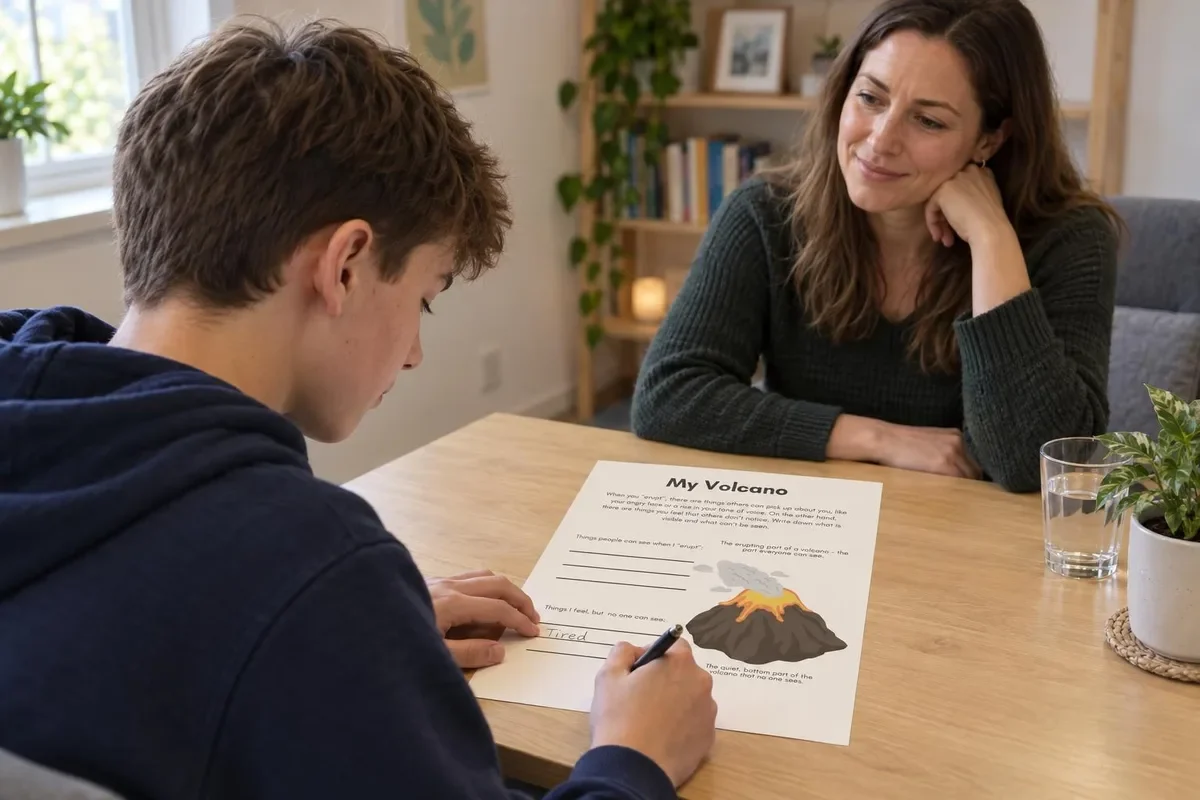
His mum says he punches his pillow when he’s angry. “It helps him let it out,” she tells you, a little proud. He nods.
It’s one of the most common ideas about anger. It’s also one of the best tested, and the results point the other way.
A review of 154 studies, with more than 10,000 people, compared two kinds of anger activities. Some turn the body up: hitting a bag, running, cycling. Others turn it down: deep breathing, meditation, mindfulness. Turning the body down clearly reduced anger and aggression. Turning it up, on average, did nothing. (Kjærvik & Bushman, 2024)
Anger doesn’t need to come out. It needs to come down.
That one idea will help the teen in front of you more than any pillow, and it makes your work clearer too.
In short
Anger worksheets help a teen aged 12–18 see what happens before, during and after an outburst, and find a way to calm the body down. Calming activities reduce anger far better than “letting it out”. Listen for what the teen says about their anger, and pick the page that fits that sentence.
You’re in good company
Anger, irritability and aggression are among the most common reasons children and teens are referred for help. The good news: talking-and-practising approaches like CBT have strong support from many controlled trials. (Sukhodolsky et al., 2016)
So when an angry teen sits down across from you, you’re doing well-trodden work. The pages below are built on the same CBT and mindfulness ideas.
Five things angry teens say, and the page for each
Teens rarely ask for anger help in those words. They say something else, often with a shrug. Each of these sentences tells you where to start.
“I just snapped. It came out of nowhere.”
It almost never comes out of nowhere. It just feels that way from inside.
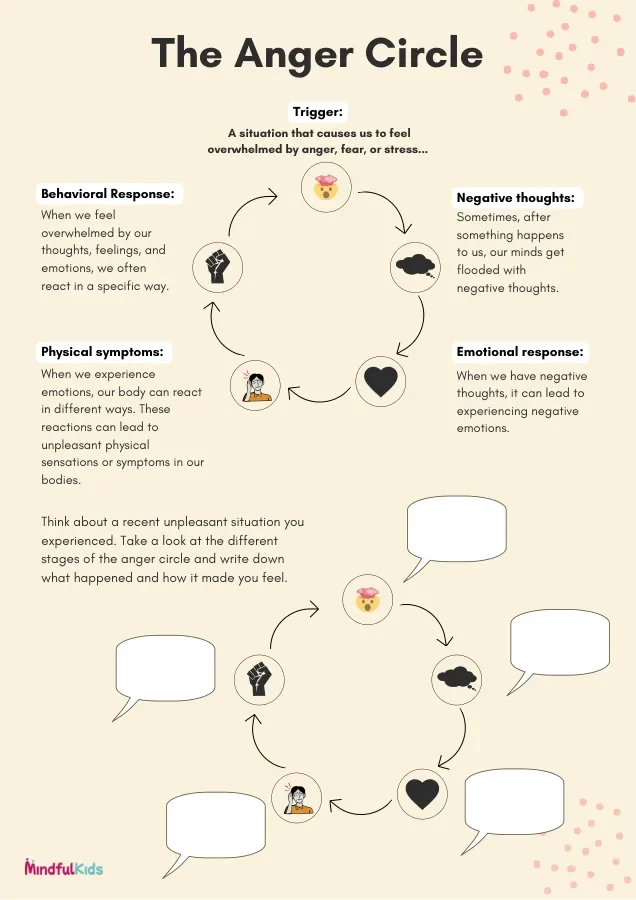
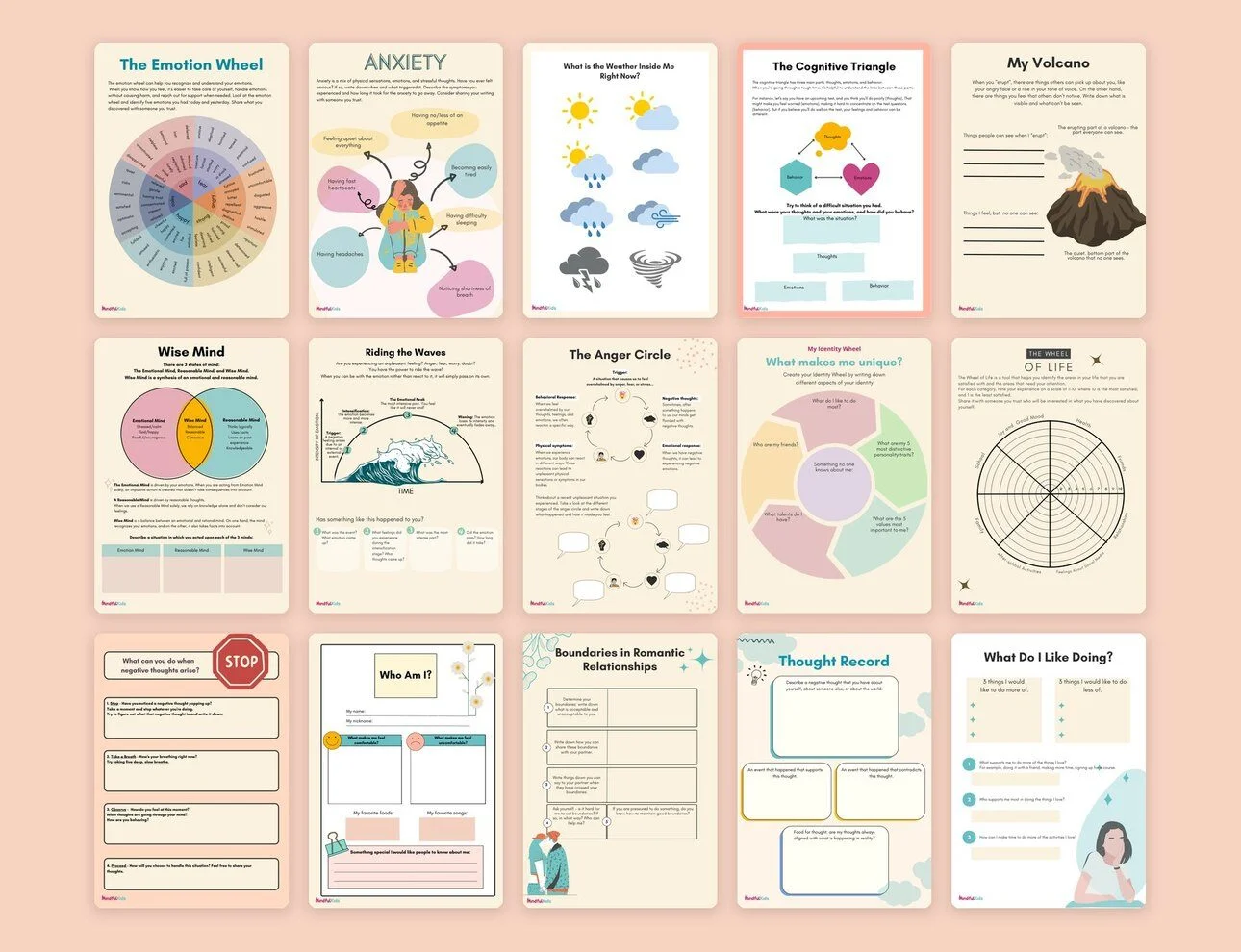
The Anger Circle breaks one outburst into five parts: the trigger, the negative thoughts, the emotion, the body’s reaction and the behaviour. The teen picks one recent moment and fills in each part. Most teens are surprised by how much happened in those few seconds.
Try saying: “Let’s slow it down like a replay. What happened right before?”
“Everyone thinks I’m just an angry person.”
Others see the shouting. They rarely see what’s underneath it.
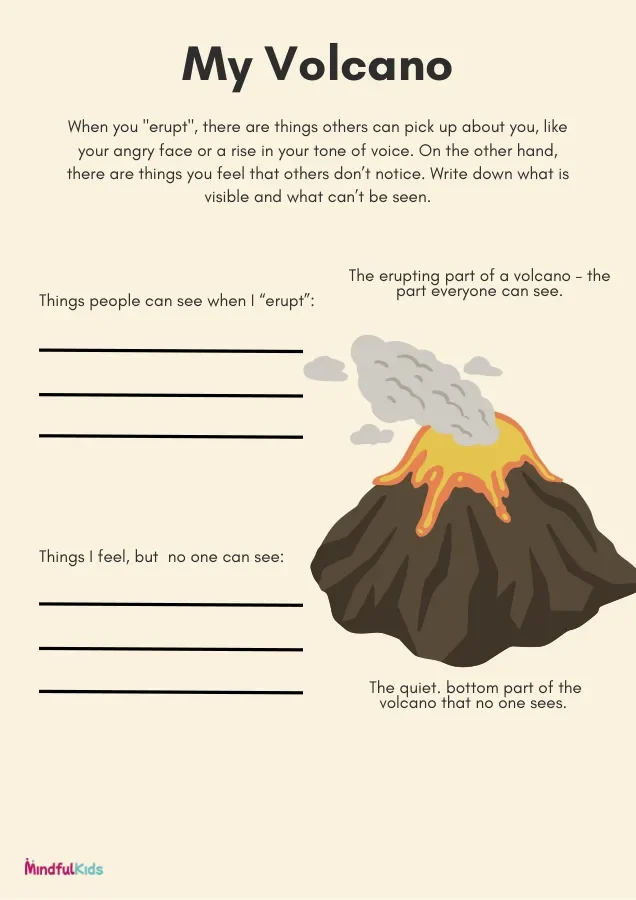
My Volcano has two parts. At the top, “Things people can see when I erupt”: a red face, a loud voice, a slammed door. At the bottom, the part of the volcano no one sees: hurt, embarrassment, feeling left out. Teens often write things at the bottom they’ve never said out loud.
Try saying: “People see the top part. What’s going on down here, where no one looks?”
“When I’m that angry, I can’t stop.”
At the peak, that’s true. The trick is knowing the peak doesn’t last.
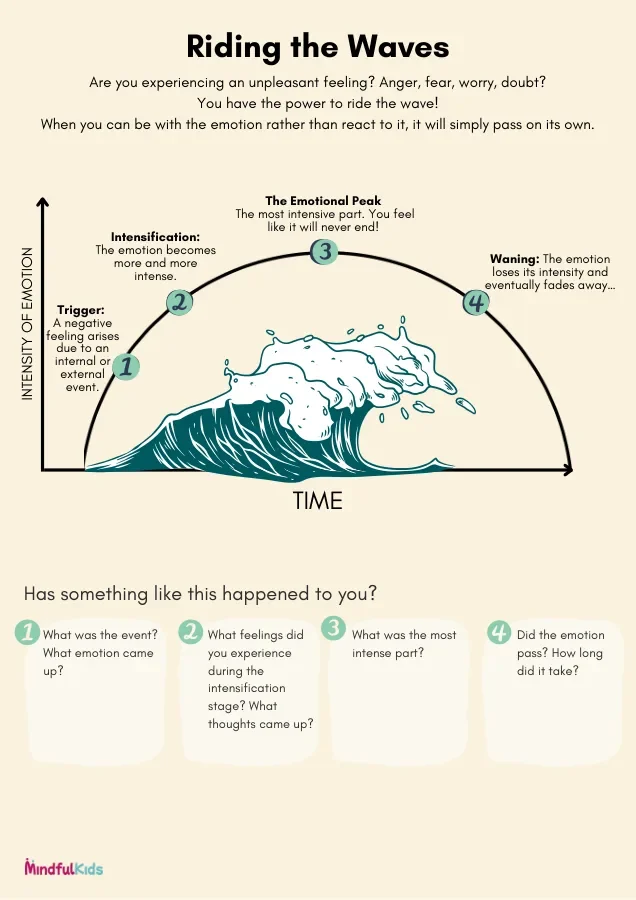
Riding the Waves draws an emotion as a wave: the trigger, the build-up, the peak where “you feel like it will never end”, and the part where it fades. The teen maps one real moment onto the wave and answers: did it pass, and how long did it take?
This is where calming the body fits. The teen doesn’t have to stop the wave. They only need to get through the peak without acting on it. A few slow breaths, cold water on the hands, walking to another room. All of them turn the body down.
Try saying: “Even the biggest wave goes back down. What helps you wait it out?”
All these pages are in this kit
CBT & Mindfulness Kit for Teens (12–18)
Over 50 printable worksheets on anger, anxiety, thoughts and emotions. Instant PDF download, 30-day money-back guarantee.
“It’s not fair. They started it.”
Sometimes they’re right. Someone else did start it. The question is what’s still theirs to steer.
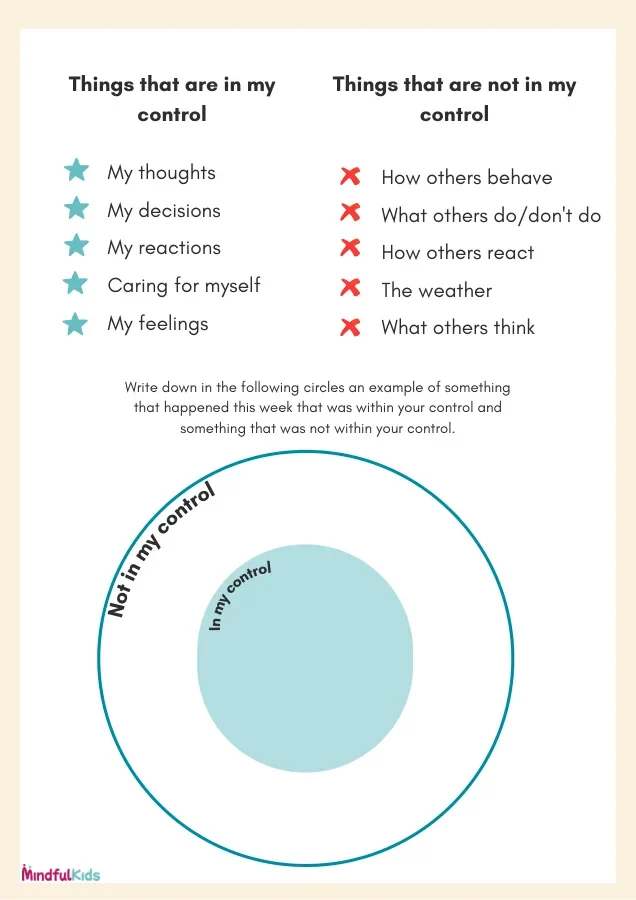
Things in my control splits the world in two. Not in my control: how others behave, what others think, the weather. In my control: my thoughts, my decisions, my reactions, caring for myself. The teen then writes one thing from this week in each circle.
This page works because it doesn’t argue about who started it. It moves the teen from a fight they can’t win to a choice they can make.
Try saying: “You can’t control what he said. What part of what happened next was yours?”
“Whatever. I don’t care.”
“I don’t care” often means “I care, and it’s too much”. Logic alone won’t reach it, and feelings alone won’t calm it.
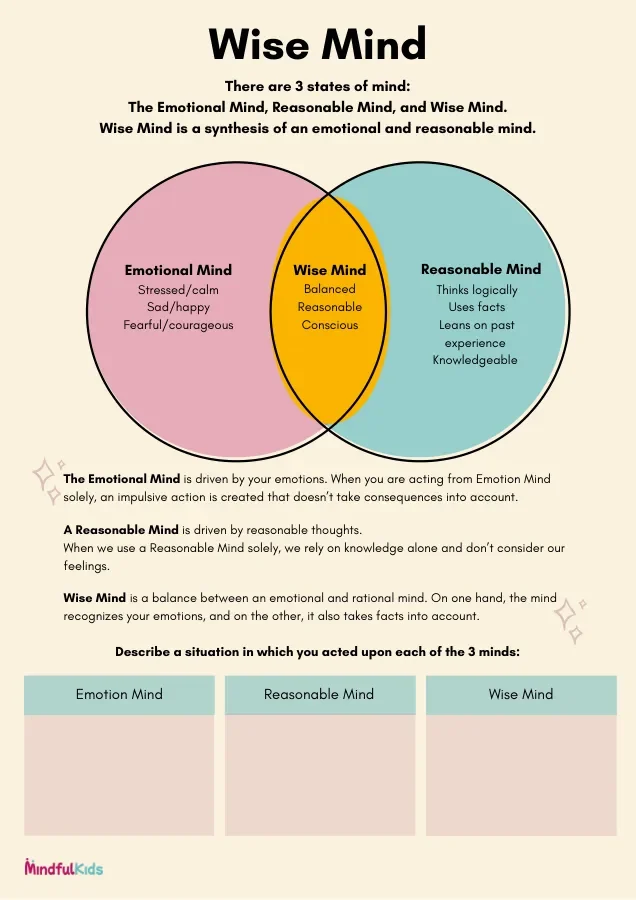
Wise Mind shows three states as two overlapping circles. The Emotional Mind acts on feelings alone. The Reasonable Mind uses facts alone. Where they overlap is the Wise Mind: balanced, aware of both. The teen describes a moment they acted from each one.
Teens like this page because it doesn’t call their feelings wrong. Feelings are half of wisdom. They just need the other half too.
Try saying: “That sounds like Emotional Mind was driving. What would Wise Mind have said?”
A calm-down plan the teen writes
After two or three of these pages, the teen knows their own pattern. Turn it into a short plan, in their words, on one card or one phone note:
- My early signs: what the body does first. Hot face, tight fists, a fast heart.
- My turn-down move: one thing that calms the body. Five slow breaths, cold water, stepping outside.
- My words: one sentence that buys time. “I need a minute.”
Keep it short enough to remember at the peak of a wave. Three lines beat a full page.
What to tell parents
Share the main finding: calming the body works better than letting anger out. Then suggest a family version of the teen’s plan. When anyone in the house is near the top of the wave, they can say “I need a minute” and leave the room, and the others let them go. Come back to the problem once everyone is calm.
And gently retire the pillow. A slow walk round the block will do more.
Worksheets for this topic
CBT & Mindfulness Kit for Teens (12–18)
Over 50 printable worksheets that help teens understand their anger and calm it down. Instant PDF download, 30-day money-back guarantee.
Questions people ask
Does hitting a pillow help with anger?
Research says no. A review of 154 studies found that activities that raise arousal, like hitting a bag or running, did not reduce anger on average. Activities that calm the body, like slow breathing, did.
What age are these anger worksheets for?
They are made for teens aged 12–18. Younger teens often start best with the visual pages, My Volcano and Riding the Waves. Older teens usually enjoy Wise Mind.
What is the best first anger worksheet for a teen?
Listen to how the teen talks about their anger. “I just snapped” points to the Anger Circle. “Everyone thinks I’m angry” points to My Volcano. Start with the page that matches their own words.
Is CBT effective for anger in teens?
Yes. CBT for anger and aggression in children and teens has been tested in many randomized controlled trials, with strong support.
How long does an anger outburst last?
It varies, but every emotion rises, peaks and fades. Riding the Waves helps teens notice that pattern in their own life, so the peak feels less endless next time.
Sources
- Kjærvik SL, Bushman BJ. A meta-analytic review of anger management activities that increase or decrease arousal: what fuels or douses rage? Clin Psychol Rev, 2024. PubMed
- Sukhodolsky DG, et al. Behavioral interventions for anger, irritability, and aggression in children and adolescents. J Child Adolesc Psychopharmacol, 2016. PubMed